

You responded to the lead. You sent a quote. Then nothing happened.
The prospect went quiet. You meant to follow up, but the week got busy. By the time you circled back, they had already hired someone else.
This is not a motivation problem. It is a follow-up problem. And it is the most expensive gap in most small businesses.
Research shows that 80% of sales require five or more follow-up contacts. Most small business owners stop after one or two. The leads are there. The follow-up is not.
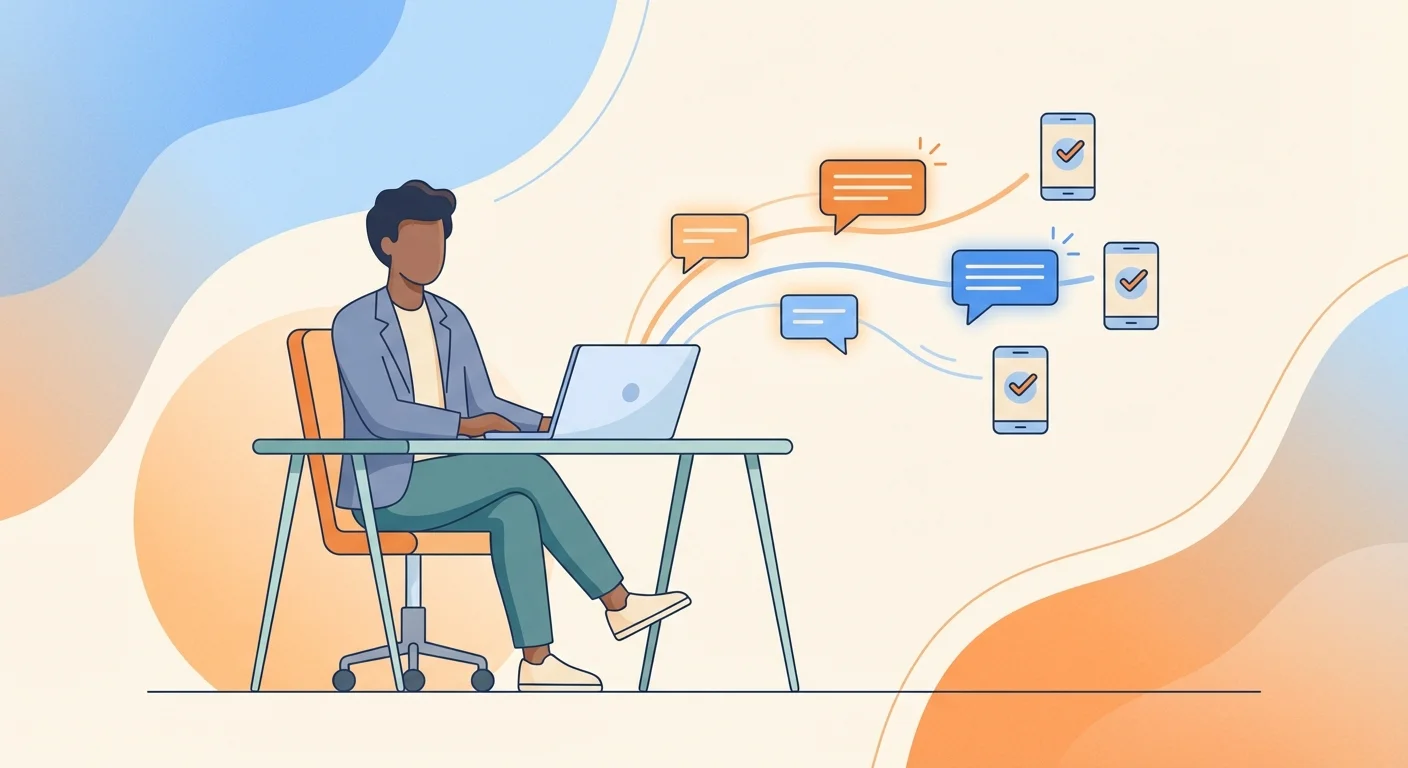
AI lead follow-up fixes this. It picks up where the first response left off and keeps working the lead until they book, buy, or tell you to stop. No manual effort. No forgotten prospects. No deals lost to silence.
The Follow-Up Gap That Costs Small Businesses Revenue
Lead generation gets all the attention. Businesses spend thousands on ads, SEO, and marketing to fill the top of the funnel. But the real revenue leak happens after the lead comes in.
Here is what the data shows:
- 48% of salespeople never make a single follow-up attempt. They respond once and move on.
- 44% of salespeople give up after one follow-up. That means 92% of all sales efforts stop after two contacts or fewer.
- The average prospect needs five to seven touchpoints before making a decision. Most businesses never get there.
For small businesses without a sales team, the math is even worse. The owner is answering calls, running jobs, handling operations. Follow-up falls to the bottom of the list every single day.
This is why speed to lead matters, but it is only half the equation. Responding fast gets the conversation started. Following up consistently is what closes the deal.
AI bridges both sides. It responds instantly and follows up automatically. If you are already using AI lead generation to fill your pipeline, follow-up is the natural next step that turns those leads into revenue.
What AI Lead Follow-Up Actually Does (And Does Not Do)
AI lead follow-up is not a drip campaign. It is not a sequence of generic emails sent on a timer. It is an intelligent system that decides when to reach out, what to say, and which channel to use based on how the prospect has responded so far.
Here is what separates AI follow-up from basic automation:
Intent-based timing
Traditional drip campaigns send messages on a fixed schedule. Day 1, Day 3, Day 7. They do not care whether the prospect opened the last message, clicked a link, or asked a question.
AI follow-up reads the signals. If a prospect opened your quote but did not respond, it follows up the next day with a question. If they replied asking for more information, it responds in minutes with an answer. If they went completely silent, it waits longer before checking in so it does not feel pushy.
Multi-channel outreach
Most follow-up tools work in one channel. Email only. Or text only. AI follow-up works across text, email, and phone, picking the channel the prospect is most likely to respond to.
A prospect who texts you at 9 PM probably prefers text. A prospect who filled out a web form might respond better to email. AI learns the preference and adjusts.
Personalized conversations
Generic "just checking in" messages get ignored. AI follow-up references the original conversation. It mentions the specific service the prospect asked about. It answers questions they raised. It feels like a real follow-up from a real person, not a template.
What it does not do
AI follow-up does not replace relationship-building. It does not handle complex negotiations or close enterprise deals. It handles the repetitive, high-volume persistence that most small businesses cannot maintain manually. Your team steps in when the lead is ready for a real conversation.
Industry Playbooks: AI Follow-Up in Action
Different industries have different follow-up needs. Here is how AI follow-up works in practice for four common small business types.
HVAC companies
An HVAC company gets a call about a new AC installation. The AI agent responds immediately and collects the details. The homeowner says they need to talk it over with their spouse.
Without AI, that lead sits in a notebook and never gets followed up.
With AI follow-up, the system texts the homeowner two days later: "Hi, just checking back on the AC installation you asked about. Would you like to schedule a free estimate this week?" If they do not respond, it follows up again five days later with a seasonal pricing note.
HVAC companies using automated lead follow-up recover leads that would otherwise disappear. For companies already using AI lead response for HVAC, adding follow-up sequences turns a fast first response into a complete conversion system.
Dental practices
A patient calls about teeth whitening after hours. The AI captures their information and answers basic questions. The patient says they will think about it.
AI follow-up sends a text the next morning with a link to the practice's whitening information page. Three days later, it texts again: "Would you like to schedule a consultation? We have openings this Thursday and Friday."
Dental practices using AI lead response capture the initial inquiry. Automated follow-up for dental practices turns that inquiry into a booked appointment.
Real estate agencies
A buyer submits a form asking about a listing. The AI responds within seconds with property details and schedules a showing. The buyer goes quiet after the showing.
AI follow-up checks in a few days later with similar listings in the same area and price range. It keeps the buyer engaged without the agent spending hours on manual outreach.
Real estate agents using AI client follow-up stay in front of prospects who are still deciding. This matters in a market where the first agent to follow up consistently is usually the one who gets the commission.
Home services companies
A homeowner requests a quote for a kitchen remodel. The AI responds with a ballpark range and schedules an in-home estimate. The homeowner cancels the estimate, saying they are not ready yet.
Without follow-up, that lead is gone. With AI, the system checks in a month later: "Hi, just wanted to see if you are still thinking about the kitchen remodel. We have some availability opening up next month if you would like to revisit the estimate."
The cost of AI lead response for home services is a fraction of what businesses lose in unfollowed leads. For companies in this space, automated lead follow-up for home services pays for itself the first month.
How to Set Up AI Follow-Up for Your Business
Getting AI follow-up running is simpler than most business owners expect. Here is the process, step by step.
Step 1: Map your follow-up gaps. Look at your last 30 leads. How many got a second contact? A third? If the answer is less than half, you have a follow-up gap that AI can fill.
Step 2: Define your follow-up sequences. Work with your AI platform to set up the timing and messaging for different lead types. A hot lead who asked for a quote needs a different sequence than a cold lead who just browsed your website. Most businesses start with two or three sequences:
- Hot leads: follow up within hours, then daily for three days, then weekly
- Warm leads: follow up the next day, then every three to five days
- Re-engagement: monthly check-ins for leads that went silent
Step 3: Connect your channels. AI follow-up works best when it can reach prospects through text, email, and phone. Connect all the channels your business uses so the AI can pick the right one for each prospect.
Step 4: Set handoff rules. Define when AI should stop following up and hand the lead to a human. Common triggers: the prospect asks a question the AI cannot answer, they express urgency, or they are ready to book a high-value service.
Step 5: Launch and review. Start with your existing pipeline of unresponsive leads. These are prospects who already showed interest but went quiet. AI follow-up often recovers 10% to 20% of these leads in the first month.
For a detailed walkthrough by industry, check the automation guides for HVAC, dental practices, real estate, or home services.
What It Costs and What You Get Back
The cost of not following up is invisible, but it is real. Here is how the numbers break down.
The cost of manual follow-up
Hiring someone to do follow-up costs $15 to $25 per hour. For a 5-person team, that adds up to $640 to $960 per month in productive hours spent on repetitive outreach. And even with a dedicated person, consistency drops as soon as they get busy or take a day off.
The cost of no follow-up
Every lead that goes unfollowed is revenue you already paid to generate. If your average customer is worth $2,000 and you lose five leads per week to poor follow-up, that is $40,000 per month in potential revenue walking away.
The cost of AI follow-up
AI follow-up platforms cost a fraction of a single hire. They work every day, respond on every channel, and never skip a lead. The ROI is not theoretical. Businesses using AI follow-up consistently report recovering leads they had written off as lost.
For specific cost breakdowns by industry, see the cost of AI lead response for HVAC, dental practices, home services, or real estate.
The Follow-Up Funnel: Where This Fits
AI lead follow-up is not a standalone tool. It is the middle of a complete lead lifecycle:
- Generate leads with marketing, ads, and SEO. AI lead generation captures every inquiry the moment it comes in.
- Respond instantly to build trust and start the conversation. Speed to lead shows why the first five minutes matter more than anything else.
- Follow up consistently to stay in front of leads who are not ready yet. This is where most businesses fail and where AI makes the biggest difference.
- Close the deal by booking the appointment, scheduling the estimate, or confirming the sale.
If you are investing in lead generation but not following up, you are filling a leaky bucket. AI follow-up plugs the leak.
Common Questions About AI Lead Follow-Up
"Will prospects know it is AI?" Good AI follow-up sounds like a real person. It uses natural language, references past conversations, and adjusts its tone based on the prospect's responses. Most prospects cannot tell the difference.
"How many follow-ups is too many?" AI adjusts based on the prospect's engagement. If someone opens every message but does not respond, it slows down. If someone asks the AI to stop, it stops immediately. The goal is persistence, not annoyance.
"What if I already have a CRM?" AI follow-up integrates with your CRM. It does not replace it. Your CRM tracks the lead. AI does the actual outreach. They work together.
"Can I customize the messaging?" Yes. You set the tone, the talking points, and the boundaries. AI handles the timing and delivery. You stay in control of what gets said.
Stop Losing Deals to Silence
The leads are already in your pipeline. They called. They texted. They filled out a form. They showed interest.
The only question is whether you follow up enough times to close the deal. For most small businesses, the honest answer is no.
AI lead follow-up changes that. It turns one response into five, seven, or ten touchpoints. It keeps the conversation going long after a human would have moved on. And it does it without adding a single hour to your day.
The businesses that follow up win the deals. It is that simple.
See how Blackbox automates lead follow-up for small businesses. Book a demo to see what is possible for your business.