

If your business misses calls after 5 PM, on weekends, or during peak hours, an after hours answering service for small business can be the difference between captured demand and lost revenue. For most service businesses, the problem is not just “missed calls.” It is missed leads, delayed response times, weak follow-up, and prospects who move on to the next company before your team ever responds.
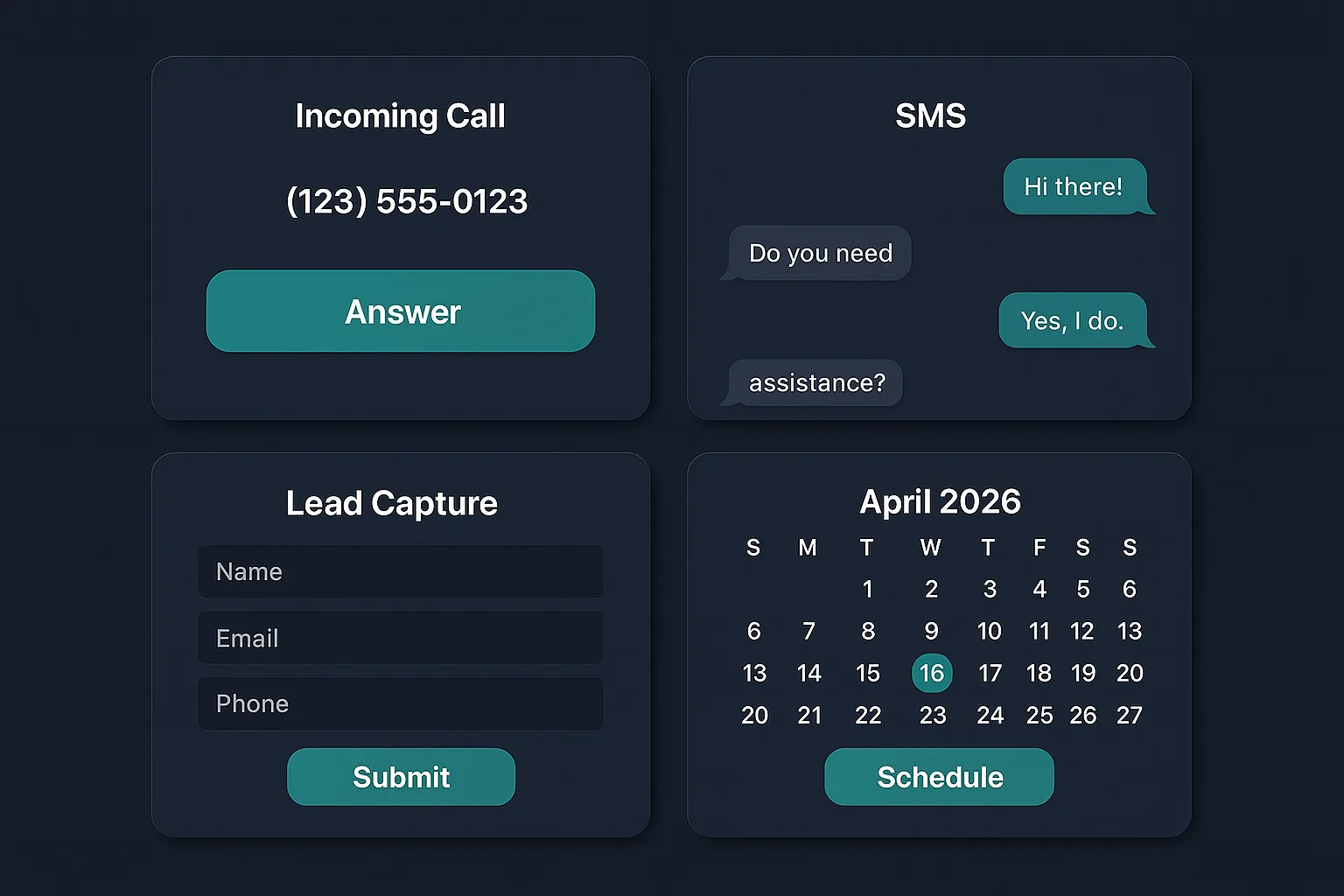
A modern after hours answering service does more than take a message. It can answer inbound calls, capture lead details, qualify intent, route emergencies, send SMS follow-up, and book appointments into your calendar or CRM. The right setup gives a small business 24/7 coverage without forcing the owner to hire night staff or rely on voicemail.
In this guide, we’ll break down what an after hours answering service for small business actually is, what it costs, what features matter, which types of businesses benefit most, and when an AI-powered answering workflow is a better option than a traditional receptionist service.
What is an after hours answering service for small business?
An after hours answering service for small business is a call handling solution that answers inbound calls when your team is unavailable, including evenings, weekends, holidays, lunch breaks, and overflow periods during the day. Depending on the provider, the service may take messages, qualify leads, book appointments, escalate urgent calls, or transfer callers to an on-call team member.
For a small business, the goal is simple: make sure every inbound call gets a useful response instead of a dead end.
Why small businesses lose leads after hours
Most small businesses do not lose leads because demand is weak. They lose leads because response systems are weak.
A prospect calls after hours because they are ready to solve a problem now. That is especially true in home services, healthcare, legal, property management, automotive, and other high-intent categories. When nobody answers, three things happen fast:
- The caller hangs up.
- They call a competitor.
- Your business never gets a real shot.
This gets worse when the only fallback is voicemail. Most callers do not want to leave a message and hope for a callback the next day. They want immediate acknowledgment, clear next steps, and confidence that someone is handling the issue.
An after hours answering service reduces that drop-off by making sure inbound calls are answered, documented, and pushed into a workflow your business can act on.
What an after hours answering service actually does
A strong after hours answering service should do more than answer with a generic script. It should help your business move the call forward.
Call answering
At minimum, the service should pick up calls professionally using your business name, basic context, and an appropriate greeting. That alone is better than letting calls go to voicemail, but it should not be the whole value proposition.
Lead capture
A quality service captures the caller’s:
- name
- phone number
- email address
- service need
- urgency
- location or service area
- preferred callback time
Without structured lead capture, your team wakes up to a pile of vague messages that still need manual cleanup.
Appointment scheduling
Some businesses need more than message taking. They need real appointment scheduling. A modern small business answering workflow should be able to:
- offer available slots
- confirm a booking
- send follow-up confirmation
- log the appointment in the calendar or CRM
Call routing and escalation
Not every call should be treated the same. A burst pipe at 11 PM is different from a routine quote request. Good after-hours call handling includes escalation rules so urgent calls go to the right person while lower-priority calls follow a standard process.
SMS follow-up and CRM logging
This is where traditional answering services often fall short. The best systems do not just take a message — they create a usable record. That means:
- logging the lead into a CRM
- sending an SMS confirmation
- notifying the right team member
- preserving call context for the next business day
How much does an after hours answering service cost?
After hours answering service cost varies a lot based on the model.
Traditional answering service pricing
Most traditional providers price around one of these structures:
- per minute
- per call
- monthly package with usage caps
- additional fees for transfers, scheduling, or bilingual support
For small businesses, that usually means paying for human coverage whether the interaction is simple or complex. Costs can rise fast if your call volume is inconsistent or if long calls eat up billed minutes.
In practice, many small businesses end up paying for message taking, basic call routing, and receptionist time without getting strong lead qualification, appointment booking, or CRM logging in return.
AI answering workflow pricing
AI-based answering systems tend to be priced more around software, automation scope, or workflow value than pure receptionist labor. That often makes them more cost-efficient when you want:
- 24/7 call coverage
- instant lead capture
- qualification logic
- appointment booking
- CRM integration
- SMS follow-up
The key question is not just “what does it cost?” It is “how much revenue does it save?” If your business misses even a handful of high-intent calls per month, the cost of not having after-hours coverage is often much higher than the subscription itself.
That is why after hours answering service cost should be evaluated against lead value, booked appointments, emergency call capture, and response time — not just the monthly line item.
Traditional answering service vs AI answering service
This is the real decision most companies are making now.
Traditional live receptionist model
A traditional answering service gives you human agents who follow a script, take messages, and sometimes transfer calls.
Pros:
- human voice on every call
- familiar model
- useful for simple message taking
Cons:
- per-minute pricing can get expensive
- inconsistent quality between operators
- limited business context
- weak CRM integration in many setups
- often more reactive than operational
AI answering service model
An AI answering service is not just a robot answering the phone. When deployed properly, it acts like an after-hours operations layer for your business. It can answer, capture lead details, qualify the inquiry, route urgency, send follow-up texts, and log everything automatically.
Pros:
- instant response 24/7
- consistent lead capture
- structured qualification
- CRM and calendar integration
- scalable without staffing overhead
- faster speed to lead
Cons:
- requires a proper workflow setup
- needs business-specific prompts, SOPs, and escalation rules
- not ideal for every emotionally sensitive scenario
Hybrid model
Some businesses want a hybrid setup: AI handles the majority of routine after-hours calls, while edge cases or urgent escalations go to a human. For many small businesses, that is the most practical operating model.
What features small businesses should look for
If you are evaluating an after hours answering service for small business, these are the features that actually matter.
24/7 call coverage
The point is reliability. If your business advertises availability, campaigns, or emergency service, your call handling should not disappear after business hours.
Lead qualification
Not every caller is the same. The system should determine whether the caller needs emergency help, wants a quote, is asking for support, or should be routed into a later callback sequence.
Appointment booking
If your business books consultations, service calls, demos, or intake calls, the answering workflow should be able to schedule without creating manual admin work.
CRM and calendar integration
A small business answering service becomes much more valuable when it pushes data into the tools your team already uses. That can include:
- HubSpot
- Salesforce
- HighLevel
- Google Calendar
- booking tools
- help desk platforms
SMS follow-up
For many small businesses, a text message is the fastest way to keep a lead warm after a missed call or after-hours inquiry. SMS follow-up should be part of the workflow, not an afterthought.
Escalation rules
A good service knows when to escalate. Medical practices, legal offices, HVAC companies, plumbers, and property managers all need different urgency logic.
Which businesses benefit most from after-hours answering?
An after hours answering service for small business is especially valuable when missed calls tend to come from urgent, high-intent buyers.
Home services
HVAC, plumbing, electrical, roofing, and garage door companies lose real revenue when emergency calls go unanswered. After-hours call handling helps capture urgent jobs before a competitor does.
Healthcare and dental
Medical practices, dental offices, and specialty clinics often need after-hours call coverage for intake, scheduling, patient routing, and triage rules.
Legal
Law firms often get inbound calls from prospects who are stressed, time-sensitive, and ready to hire. If nobody answers, they do not wait.
Property management
Property managers get urgent maintenance calls, tenant issues, and leasing inquiries outside business hours constantly. Those need routing, not just voicemail.
Automotive and dealerships
Dealerships and service departments benefit when after-hours calls are captured, tagged, and followed up fast. Inbound demand decays quickly when speed to lead is weak.
If speed to lead is a priority in your operation, see our guide on why the first five minutes decide the deal.
A better alternative: AI-powered after-hours coverage
For many small businesses, the best answer is no longer a basic answering service. It is an AI-powered workflow that functions like an after-hours front desk, lead qualification layer, and scheduling assistant in one system.
That is the difference between:
- “We took a message”
- and “We captured the lead, qualified the need, sent a follow-up text, routed the urgency, and created the next action automatically.”
This is where Blackbox fits.
Blackbox helps businesses deploy AI-powered virtual teams that can handle after-hours lead capture, support intake, routing, and follow-up using real operating logic. Instead of paying for a generic message-taking service, you get a workflow that is tied to your SOPs, calendars, CRM, escalation paths, and business goals.
If you want to see what that looks like in practice, read how Ride Motor Company recovered lost revenue with an AI BDC team.
If your business needs more than a receptionist — if it needs after-hours operations — AI is often the better fit.
Frequently asked questions
How much does an after hours answering service cost for a small business?
It depends on volume, features, and whether you use a human answering service or an AI-based model. Traditional answering services often charge per minute or per call, while AI systems are usually priced around workflow scope and automation capability.
Is an after hours answering service worth it?
Yes, if your business depends on inbound calls for leads, appointments, or urgent customer requests. One missed high-intent call can cost more than the monthly service.
What is the difference between a virtual receptionist and an answering service?
An answering service usually focuses on basic call pickup and message taking. A virtual receptionist may also schedule appointments, transfer calls, answer FAQs, and act more like a front desk. An AI system can go further by qualifying leads, sending follow-up texts, and logging everything automatically.
Can AI answer business calls after hours?
Yes. AI can answer routine inbound calls, collect lead information, qualify intent, book appointments, route urgent issues, and trigger follow-up workflows. The best results come from a business-specific setup with clear escalation rules.
The bottom line
An after hours answering service for small business is no longer just a backup phone line. It is part of your revenue system.
If your business depends on inbound calls, after-hours coverage should not stop at message taking. It should help you capture leads, improve response time, route urgent calls, and keep prospects moving forward.
Traditional answering services can help. But if you want better speed, better structure, better follow-up, and less manual overhead, an AI-powered answering workflow is often the better long-term choice.
If you want to see what after-hours coverage looks like when it is connected to real business operations, book a demo and we’ll show you how Blackbox handles it.